Chapter 2: The Five Revenue Mechanisms o
The Five Revenue Mechanisms a Published Book Unlocks for Service Professionals
By Michael Giannulis · Author of Talk Your Book Into Existence · 3 min read

Here is what nobody explains clearly enough about publishing a business book. The book does not have to sell well to work. More than 18,000 business books are published in the United States every year, and most of them sell fewer than 250 copies. That sounds like a discouraging statistic until you understand that many of those authors watch their professional lives change regardless. The mechanism is not book sales. It is what the book signals and the doors it opens.
The first mechanism is fee support. A published author is not negotiating from the same position as an equally skilled expert without a book. The book is a third-party credential that lives on a shelf, in a search result, and in a buyer's hands before the first conversation. It does not just communicate expertise. It shifts the frame of the conversation from how much do you charge to what would it cost not to work with you. That shift is worth more than most experts realize before they experience it.
The second mechanism is keynote access. The book is the standard calling card for stage invitations. Speakers without a book are competing for slots against speakers with one, and event organizers are not choosing based on who is more knowledgeable. They are choosing based on who has the most credible, portable proof of their authority. Keynote fees in the range of $10,000 to $50,000 a talk are mentioned in the book as a common outcome for authors who enter this market. The book does not guarantee those fees. It makes them accessible.
The third mechanism is shortlist positioning. Buyers of high-value professional services do not make decisions the way consumers do. They build a shortlist, do research, ask their network, and look for signals that one option is categorically different from the others. A book puts an expert in a different category. Not a better version of the same option, but a different kind of option: the person who wrote the book on this problem. That positioning change is difficult to achieve through any other means.
The fourth mechanism is inbound lead generation. A published book creates a permanent, searchable artifact that continues working after it leaves the author's hands. Clients who read it arrive pre-sold on the author's framework, pre-aligned with their approach, and pre-disposed to trust their judgment. These are not leads that require a nurture sequence. They arrive with the deal already more than halfway done. For a service professional who bills by the hour, that efficiency has a direct financial value.
The fifth mechanism is what the book describes as the authority multiplier across all other marketing activity. A book makes every other channel more effective. A podcast appearance lands differently when the host can say you are the author of this book. A LinkedIn post carries more weight when it links to a published work. A proposal converts at a higher rate when the book is attached. The book is not just a revenue mechanism on its own. It amplifies everything else the expert is already doing to build visibility.
Now watch this. These five mechanisms operate largely independently of whether the book sells. An expert whose book reaches 200 readers can still move their fee structure, appear on stages, and generate inbound leads from the positioning the book creates. The investment is not in book sales. It is in the credential the book represents, and that credential does not expire when the sales rank drops.
The honest framing is this. A book is the strongest single instrument available to a service professional for closing the Authority Gap, the distance between what an expert knows and what the market believes about them. The five revenue mechanisms are the channels through which that gap closes. Understanding them is not about optimism. It is about having a clear, specific picture of what you are actually building when you commit to finishing this book.
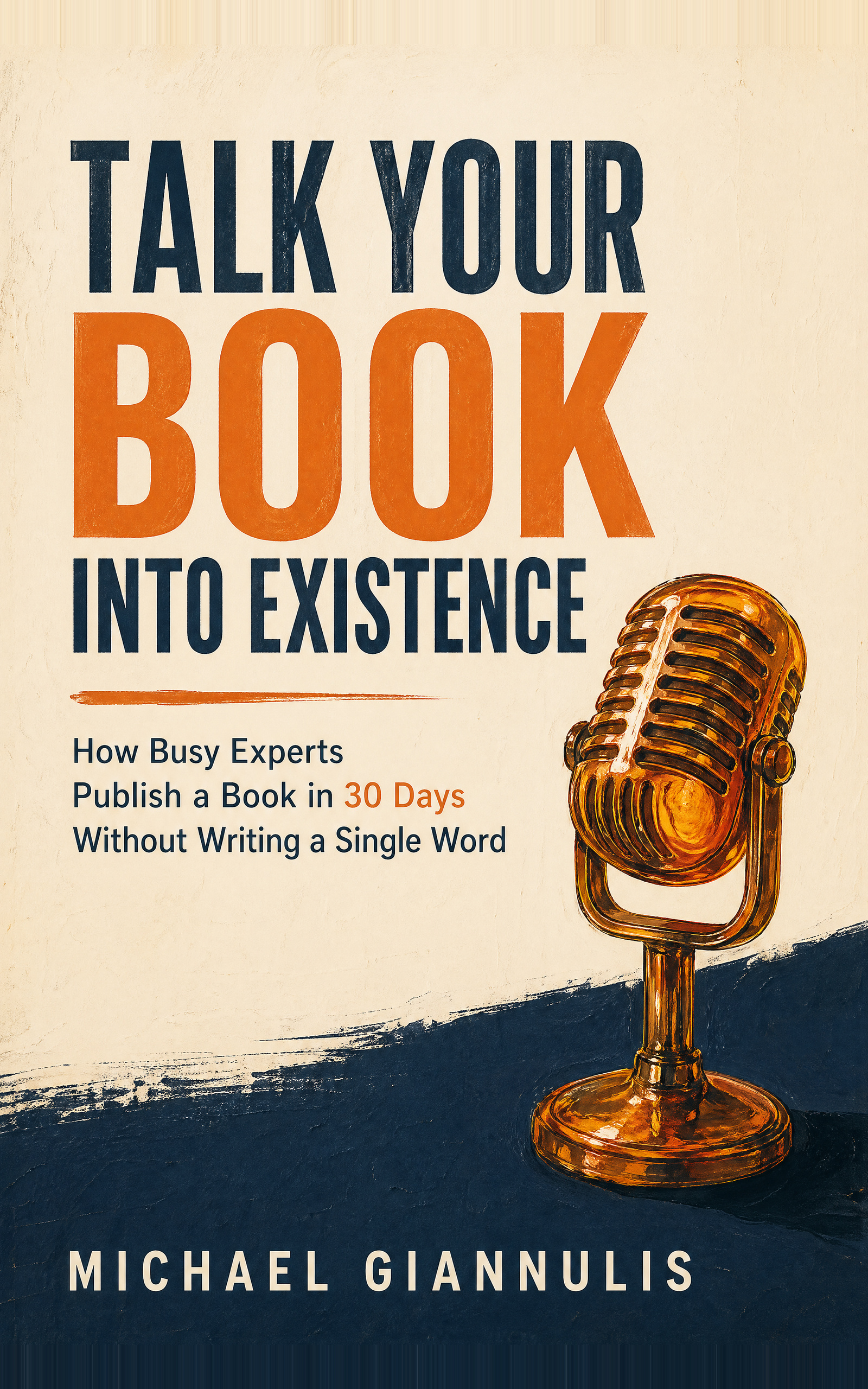
This essay comes from
Talk Your Book Into Existence
How Busy Experts Publish a Book in 30 Days Without Writing a Single Word